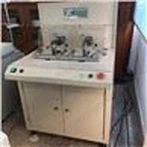
The speaker coil winder industry is dedicated to producing machinery that wind coils with high precision and efficiency. This technology is essential to the manufacturing of speakers, where the coil is crucial for producing sound.
There are several types of voice coil winding machines, including manual, semi-automatic, and fully automatic. Manual machines require an operator to use a wire guide to wind the coil by hand. Semi-automatic machines use a motor to rotate the coil and wire guide, while the operator controls the wire feed. Fully automatic machines use a computer-controlled system to wind the coil automatically with little or no operator intervention.
Some of the key technical aspects of winding equipment include the use of tension and guide systems to ensure the wire is consistently wrapped around the coil, and accurate counting and layering systems to guarantee the correct number of turns and uniformity of the coil. In addition, machines must be designed to handle different wire gauges and lengths, as different speakers require different-sized coils.
The materials used in speaker coils vary depending on the application. Copper wire is a common choice due to its high conductivity and durability. However, other materials such as aluminum and silver are also used in some applications.
Overall, the speaker voice coil winding machine industry is a highly specialized field that requires precision engineering and robust design to produce high-quality speaker coils with consistency and efficiency. Advances in technology continue to drive improvements in speaker coil winding equipment, resulting in better sound quality and more cost-effective production processes for manufacturers.