

Introduction:
Inductance winding is a process of winding a coil around a magnetic core, consisting of many turns of wire. This process is essential in the production of many electrical devices such as transformers, magnets, motors, and solenoids. In recent times, the production of inductors has seen significant technological advances with the introduction of fully automatic winding machines. These machines have made the production of inductors more reliable, fast, and cost-effective. In this article, we will discuss the technical knowledge behind fully automatic winding machines.
Fully automatic inductance winding machines:
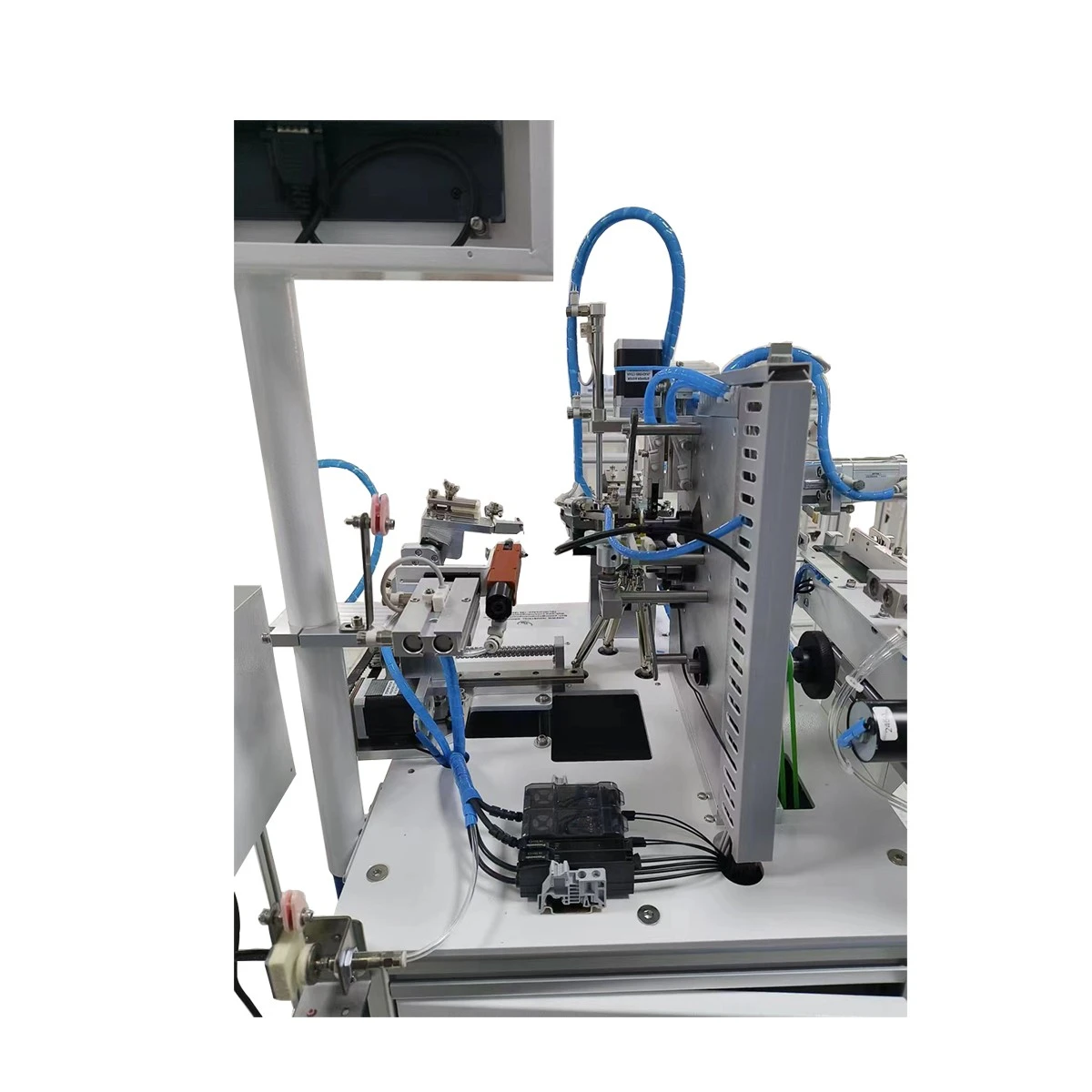
Fully automatic inductance winding machines are designed to fabricate and operate inductors automatically. These machines have various mechanisms to enable them to perform a series of operations, including wire feeding, wire cutting, core insertion, winding, and wire terminating. The machine has an automated control system that can control the speed, tension, and direction of wire feeding as well as the number of turns required per inductor. The automation technology implemented is highly efficient, and it can save on the time and expenses involved in manual winding processes.

Machine parts and functionality:
The fully automatic wire winding machine has many components that are interdependent, and they all function together to form a fully functional machine. The key components of the machine include:
1. The wire feeding mechanism
The wire feeding mechanism generally consists of a spool holder, wire feeding rollers, and a wire guide. It ensures that the wire is fed to the inductor at a uniform rate and tension, and it is responsible for ensuring the wire is straight and free from knots or kinks.
2. The core insertion mechanism
This mechanism inserts the magnetic core into the winding area before the wire replacement. It ensures that the core is positioned in the right location for winding and prevents it from moving around during the winding process.
3. The wire winding mechanism
The wire winding mechanism performs the primary function of winding the wire around the magnetic core. It includes a motor for driving the spindle, a winding head for holding the wire spool, a wire tensioner, a wire guide, and a wire cutter. The machine winds the wire around the core based on pre-defined settings, which account for the number of turns required, the winding direction, the number of layers, and the spacing.
4. Automatic wire-cutting mechanism
The automatic wire-cutting mechanism enables the machine to cut the wire after each inductor is fully wound and the required length is established. It ensures that the cut is precise as programmed, and it eliminates the manual process.
5. Wire termination mechanism
Wire termination involves the application of terminals to the inductor wire ends, attaching them to their respective device or gadgets. The machine has an automated mechanism that can attach the terminals to the wire ends as needed.
Advantages of toroidal transformer winding machine:
1. High accuracy and consistency
Fully automatic winding machines have high accuracy as they can program the number of turns, direction, and wire spacing, ensuring that they consistently produce high-quality inductors. This eliminates the inconsistencies associated with human error and manual winding processes.
2. High productivity
Fully automatic inductance winding machines can operate continuously without stopping, drastically increasing productivity and reducing the time spent on manual processes.
3. Customizable settings
These machines are highly flexible and can be programmed to produce inductors with unique specifications, allowing for customization in the final product.

4. Reduced cost
Fully automatic inductance winding machines can reduce the cost of production by eliminating the need for manual labor, reducing material waste, and minimizing the need to fix/rework faulty inductors.
5. Simplified and streamlined workflow
The automation of the process simplifies the entire production process, allowing for easy regulation, quality control, and error checking.
Conclusion:
Fully automatic inductance winding machines have revolutionized the process of inductor production, allowing for high-quality inductors to be produced at a faster rate and reduced costs. These machines have ensured that the production of inductors remains automated, consistent, and precise. As further technological advancements are made, these machines will only become more effective, further increasing productivity, and ensuring that this crucial process remains efficient, cost-effective, and reliable.


