What Factors to Consider When Purchasing Common‑Mode Choke Winding Equipment
When buying common‑mode choke winding equipment, you need to evaluate core‑wire compatibility, winding process capability, automation grade, control & tension performance, supplier manufacturing strength, after‑sales support, and total‑cost‑of‑ownership, rather than only comparing price or maximum speed.
Proper evaluation helps you get stable toroidal coil quality, reduce defect rates, and match your real‑world production volume.
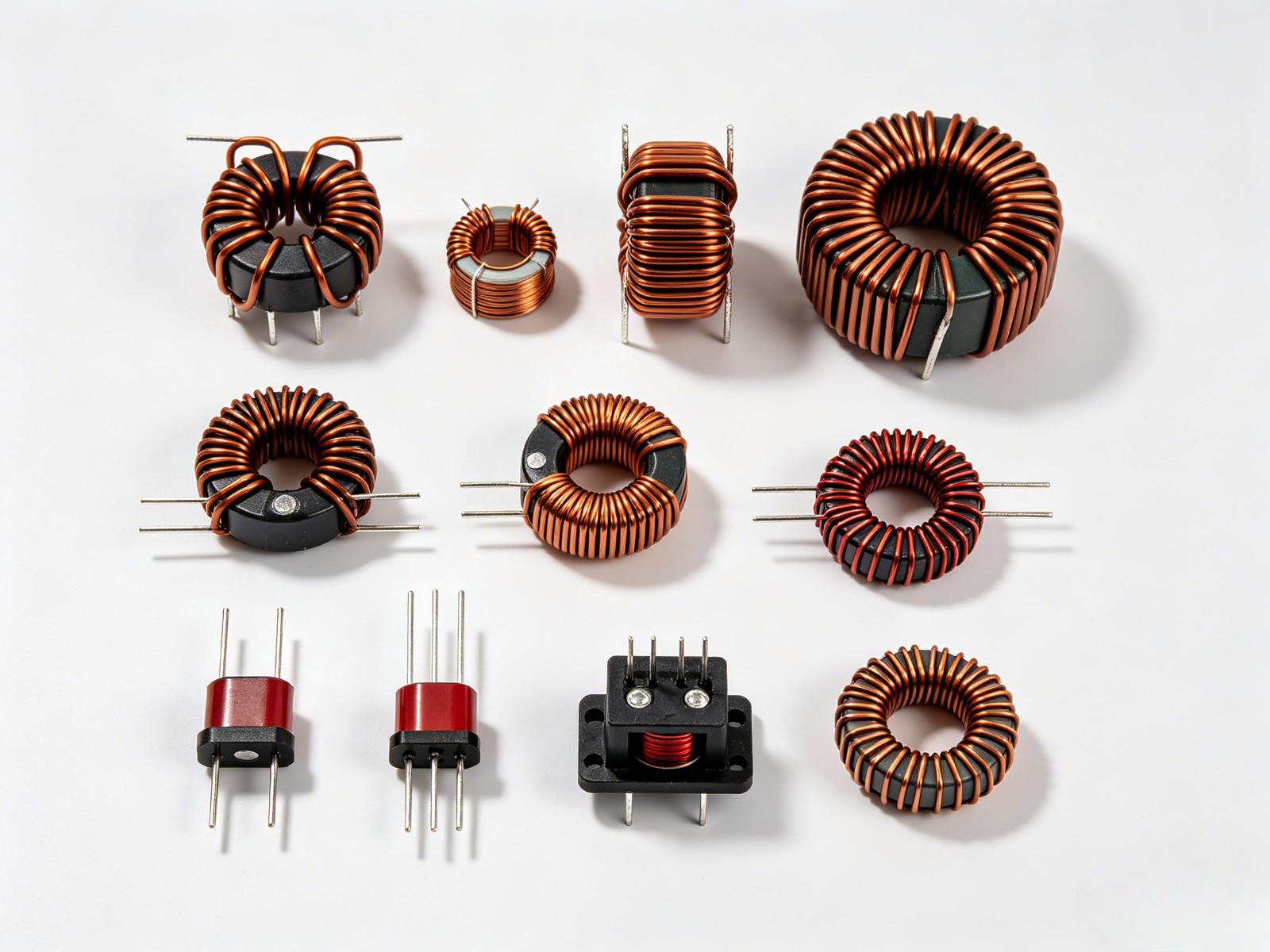
Common‑mode chokes are key EMI suppression components widely used in power supplies, new‑energy inverters, and industrial electronics. A hook‑type toroidal winding machine dominates mass‑production for common‑mode choke coils.
Many buyers only focus on quoted price or winding speed and ignore critical matching conditions, leading to high scrap rates, frequent downtime, and poor coil consistency.
This buying guide breaks down core evaluation points for magnetic‑component manufacturers, procurement and process engineers. Source: www.coilwindingmachinechina.com
What core‑and‑wire compatibility should you verify for common‑mode choke winding equipment?
Confirm the machine's supported magnetic‑ring outer‑diameter range, inner window size, and allowable wire‑diameter span, and cross‑check against your actual common‑mode choke product portfolio.
Core dimension matching
Hook‑type toroidal winding machines have hard physical limits for toroidal cores.
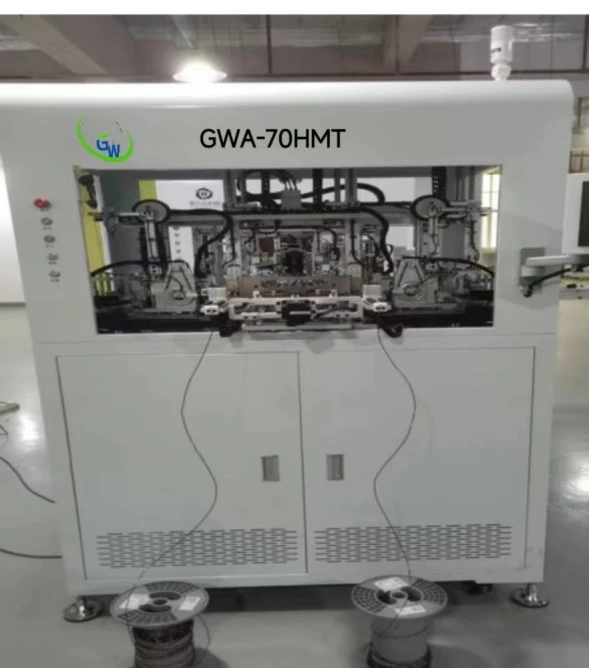
For example, the GWA‑70HMT fully automatic hook‑type toroidal winding machine supports core outer diameter 14‑45 mm;
GWAT‑80HM fits 31‑55 mm cores.
You must check the outer diameter, inner window height, wire diameter, number of winding turns, and winding method.
Even if the outer diameter fits, too‑small inner windows will prevent the hook shuttle from passing smoothly and cause production failure.
Enameled copper wire gauge range
Fine wire needs precision ceramic wire guides; thicker wire requires higher shuttle torque.
If you produce multiple common‑mode chokes with wire from 0.2 mm to 1.6 mm, confirm the model can cover your full production range. Running wire outside the official specification will result in broken wire, damaged enamel insulation, and unqualified DCR parameters for finished common‑mode inductors.
|
No. |
Item category |
Value |
Value |
|
1 |
Equipment model: |
GWA-70HMT |
GWAT-80HM |
|
2 |
Adapt to the magnetic ring (outer diameter): |
14mm-45mm |
31mm-55mm |
|
3 |
Adapt to wire diameter: |
0.5mm-2.0mm |
1.0mm-2.5mm |
|
4 |
Length of unilateral line: |
1200mm |
1200mm |
|
5 |
Winding speed: |
Depends on wire diameter and number of coils |
Depends on wire diameter and number of turns |
|
6 |
Application winding method: |
Conventional winding method / forward winding |
3-phase common mode (conventional winding method) |
|
7 |
Power supply: |
220V/50Hz single-phase alternating current |
220V/50Hz single-phase AC |
|
8 |
Air source: |
0.55Mpa-0.60Mpa |
0.55Mpa-0.60Mpa |
|
9 |
Noise: |
60 decibels |
60 decibels |
|
10 |
Equipment power: |
3KW |
3KW |
|
11 |
Equipment power: |
0.55°/hour |
0.55°/hour |
|
12 |
Operating ambient temperature: |
-5°C~40°C |
-5°C~40°C |
|
13 |
Relative humidity: |
(40~90)%RH |
(40~90)%RH |
|
14 |
Comprehensive pass rate: |
99.5% |
99.5% |
|
15 |
Dimensions: |
Length 1750 mm (including belt line) * width |
Length 3050mm (including belt line) * width 1150mm * height 2050mm |
|
16 |
Machine weight: |
500KG |
800KG |
Real‑sample trial winding suggestion
Before formal ordering, send your actual toroidal core and magnet‑wire samples to the equipment supplier for trial winding.
This is the most reliable way to eliminate theoretical‑spec vs real‑process deviation, as recommended on www.coilwindingmachinechina.com.
What winding‑process capabilities must common‑mode choke winding equipment deliver?
The equipment needs symmetric dual‑winding function, accurate turn‑count control, and support for your required winding pattern, directly determining final choke electrical performance.
Symmetrical dual‑coil winding performance
Common‑mode chokes require two windings with identical turn counts and symmetry.
Poor symmetry will degrade EMI filtering performance and increase differential‑mode leakage inductance.
Verify whether the hook‑winding machine supports synchronized dual‑wire winding and independent turn‑count monitoring for both coils.
Winding pattern and program storage
Different common‑mode choke designs call for standard toroidal winding, butterfly winding, or segmented winding.
Production factories with multi‑SKU orders need equipment that can store multiple winding recipes.
Quick recipe recall reduces change‑over time between different common‑mode inductor batches.
Turn‑count accuracy and defect‑alert function
Turn‑count error creates inductance‑value out‑of‑spec finished goods.
Premium toroidal winding machines integrate real‑time turn‑count detection and alarm for missing turns or missed wire feeding.
This feature drastically lowers post‑winding testing workload for your common‑mode choke production line.
Which automation level fits your common‑mode choke manufacturing scenario?
Choose semi‑automatic toroidal winding machines for low‑mix, low‑volume orders;
Pick fully‑automatic hook‑type winding machines for high‑volume mass‑production to cut labor dependency.
Semi‑automatic toroidal winding machine for small‑batch custom orders
Semi‑auto winding equipment offers lower capital investment. Operators load and unload toroidal cores manually.
It works well for R&D prototyping, small‑batch custom common‑mode chokes, and job‑shop manufacturers.
Typical models include mid‑speed gear‑head toroidal coil winders.
Fully‑automatic hook‑winding machine for mass‑production
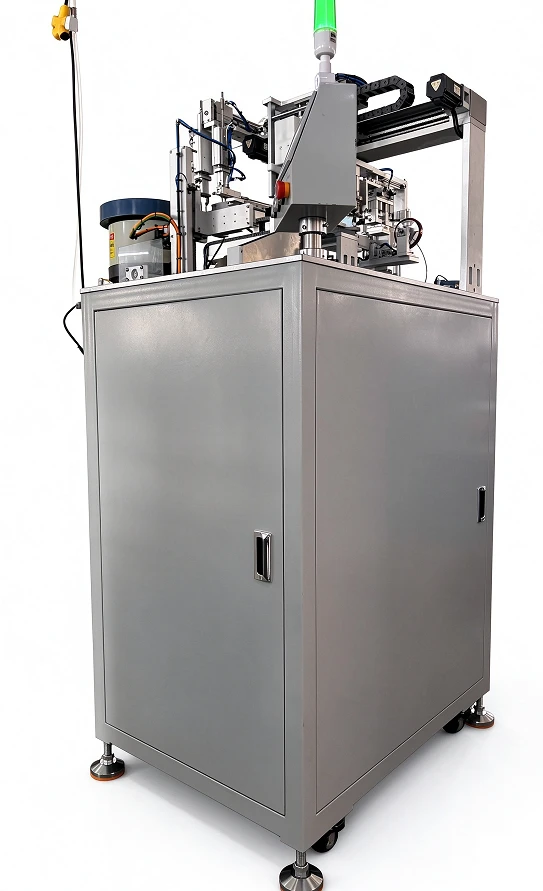
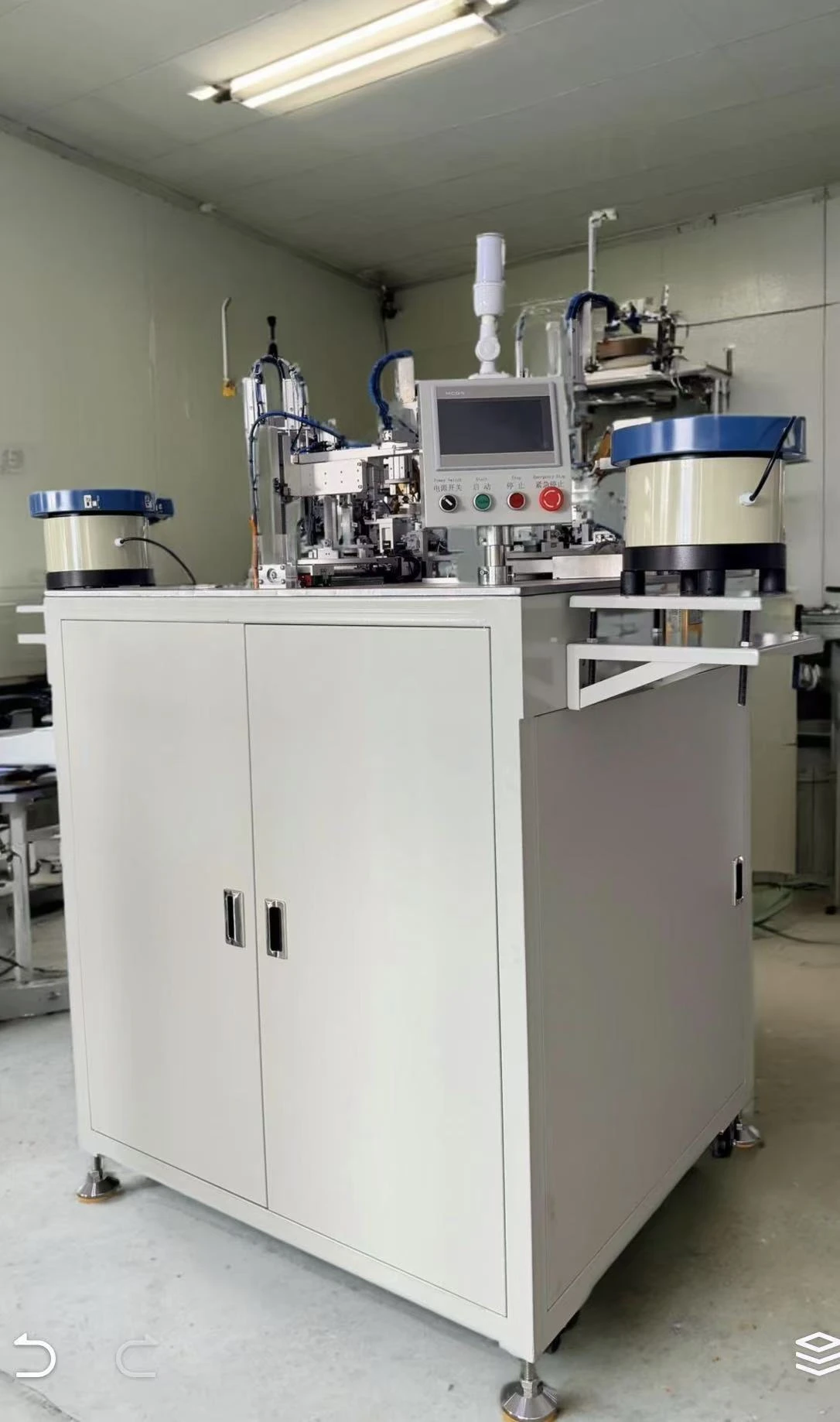
Models like GWAT‑80HM fully‑automatic common‑mode hook winding machine realize automatic core feeding, winding, and discharging.
It suits large‑volume manufacturing of power‑supply common‑mode chokes. Higher UPH reduces manual operation errors and improves batch‑to‑batch coil consistency.
Note that full‑auto equipment demands a higher budget and stable production lot sizes.
Expandability for future product upgrade
Evaluate whether you can add optional modules such as taping stations or turn‑testing interfaces later.
Avoid buying equipment that cannot adapt to new common‑mode choke specifications in 2‑3 years.
Why are tension‑control and motion‑control systems critical for common‑mode choke winding equipment?
Stable closed‑loop tension control plus S‑curve servo acceleration‑deceleration prevents enamel damage, wire overlapping, and inconsistent coil resistance for common‑mode inductors.
Closed‑loop wire tension control
Unstable tension causes two typical defects:
over‑tight tension scratches enamel film and leads to insulation failure;
insufficient tension creates loose winding layers and drifting inductance values.
Quality hook‑type toroidal winding machines adopt active closed‑loop tension modules, adjustable for fine or heavy magnet wire.
S‑curve servo motion control
Sudden start‑stop shocks generate wire snags and winding jitter.
PLC‑based servo systems with S‑curve acceleration‑deceleration deliver smooth shuttle movement, which is essential for high‑quality common‑mode choke coils.
When reviewing quotations, confirm whether the controller is independently developed for toroidal winding tasks.
Fixture repeatability
Repeated core clamping must maintain precise positioning.
Poor fixture repeatability generates uneven winding and high product rejection ratios during long‑run production.
What supplier qualifications should you assess before purchasing common‑mode choke winding machines?
Prioritize experienced winding‑machine manufacturers with proven industry cases, in‑house R&D and manufacturing capability, instead of trading companies that resell third‑party equipment.
Manufacturer background and industry experience
Grewin Industrial Group Co., Ltd., founded in 1993, is a professional manufacturer of toroidal winding machines, taping machines, and test instruments for transformers, inductors, and common‑mode chokes.
When assessing suppliers, check years of focus on magnetic‑component automation, real customer references, and onsite factory audit possibilities.
Customization capability
Some common‑mode choke projects need modified fixtures, special shuttle parts, or communication docking with MES production systems.
Reliable factories support reasonable customization, while simple resellers cannot provide hardware or software modification.
Compliance and documentation
Check CE certification, operation manuals, electrical schematics, and spare‑part lists.
Complete documentation shortens operator training and future maintenance work.
What after‑sales service and total‑cost factors require attention?
Do not only compare upfront price;
evaluate spare‑part availability, remote‑support response, on‑site service, and long‑term operating cost of the toroidal winding machine.
Warranty and technical‑support response speed
Clarify warranty scope, response time for remote troubleshooting, and conditions for on‑site engineer dispatch.
For overseas buyers, confirm online remote diagnostic support, which reduces production‑line downtime risk.
Consumable and spare‑part supply
Hook shuttles, ceramic wire guides, and clamping fixtures are wearing parts.
Confirm lead‑time and pricing for replacement spare parts.
Some low‑cost machines have discontinued spare‑part supply after several years, creating high long‑term risks.
Training and process hand‑over
Good suppliers provide operator training, parameter setting guidance, and process reference for common‑mode choke winding.
Even high‑quality hook‑type winding machines cannot achieve good results without proper process parameter tuning.
Conclusion
Purchasing common‑mode choke winding equipment is not simply selecting the cheapest or fastest toroidal winder.
You need to match core‑wire specifications, verify winding‑process performance, select suitable automation level, inspect tension‑and‑motion‑control performance, audit supplier manufacturing competence, and calculate full‑lifecycle service costs.
If you want to explore hook‑type toroidal winding machine solutions for your common‑mode choke production, visit www.coilwindingmachinechina.com to review product portfolios and request sample trial‑winding service.