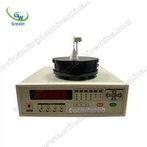
The transformer stranding winding machine is a very popular equipment in the electrical industry. This type of equipment can be used in many different ways. It is also very easy to use and maintain. With the right information, you will be able to maintain and repair your transformer stranding winding machine effectively and efficiently.

Assemble
If you want to make a transformer, you will need a wooden bobbin, a spool of thin wire, and a lot of insulation material. These materials are used for a variety of purposes. The weight of the materials will determine the total weight of the finished transformer.
It is common to use thick copper wires for the primary windings and thinner wires for the secondary windings. Big transformers typically weigh around 25 kilograms for the primary and around 30 kilograms for the secondary.
You can also use enamelled wire and plastic-insulated wire. In these cases, you will need enough insulating material to hold the wires in place. To remove enamelled wire, you will need to strip it in a solder bath.
Most modern transformers of small to moderate size are wound on plastic bobbins. Some winders can cut strands of wire before putting them on the bobbin.
To create a high-quality winding, you will need to make sure that each layer of loom yarn is wound as precisely as possible. This will ensure that each turn is in close contact with its neighbor. Embedding the wire is important because each layer will end up alternating between turns.
It is also possible to wind the primary and secondary wires side-by-side. This will require less wire than if each wire is wound separately. However, if the laminations are too loose, they will repel each other and the transformer will vibrate.
To make a high-quality winding, you should use a thin insulating material. You should also try to use the proper spacing between the layers. When using thin insulation, however, you should be careful not to let objects strike the material, which can bend it.
A good idea is to affix cotton ropes to the ends of the wires and to anchor them to the bobbin. These will keep the layers from falling out and help maintain safe creepage distance.
There are other types of bobbins, but they are often hard to find. For example, some bobbins have pins molded into the core. Also, some bobbins do not have slits for terminals.

Maintenance
When it comes to maintaining transformer stranding winding machines, there are several things that you should know. These include how to perform maintenance, what types of equipment are used and how they should be inspected. In addition, you also need to know how to set up the personnel arrangement for the job.
A good maintenance plan can improve the reliability of the system and the overall service life of the transformer. It can help to detect problems early, and can prevent catastrophic failures. Moreover, you can quantify the aging process, which can also contribute to your ability to monitor the transformer.
The most common fault is a short circuit. Typically, the short circuit is caused by a faulty control system. However, it may also be a result of an incorrectly timed protection relay.
Maintaining the stranding winding machine is crucial in order to keep its failure rate low. To do so, you need to prepare the required spare parts and equipment. You also need to ensure that the equipment is earthed. If it is not, you might need to take action.
Before you begin your maintenance routine, it is important to take measurements using a heat-sensitive camera. This will help you determine the condition of the transformer's insulation. Besides, you can check the polarization index of the transformer.
The temperature of the transformer's windings should also be measured. This is done with a battery operated megger. Moreover, you can also clean the coolers by brushing inside the water tubes.
The protective equipment of the transformer will give you an alarm if something is wrong. This means that you need to check for loose connections, airborne contaminants and pest ingress.
When it comes to checking the safety of the transformer, you should ensure that all circuit breakers, isolators and oil pumps are in their correct position. In addition, you should check the alarm contacts of the Buchholz relay.
Lastly, you should consider the temperature of the incoming and outgoing air. Checking the pressure loss of the system should be done. Additionally, you should ensure that the air fans and oil pumps are working properly.
Repair
It is important to have a daily maintenance plan for your transformer winding machine. The main purpose of this plan is to maintain the quality of the machine and minimize the failure rate. To do this, you need to have a sense of responsibility and a general knowledge of the various tools and instruments.
One of the best ways to ensure high quality winding is to use thin insulation material. Thin wires are easier to bend than thick ones.
Another way to make the machine more accurate is to check the oil circuit system for any blockage or damage. Solidified grease and dust can also affect the transmission performance. Lastly, be sure to clean the winder motor every day.
A proper maintenance program for your winding machine should include various temperature controls and ventilation status. It should also include maintenance of relay contacts and a tight transmission belt.
If your transformer is malfunctioning, it may have an overload. But, be careful, since the transformer may have a manufacturing defect. This can cause a large transient. Moreover, the core may fall apart if compression is relieved.
You should never dismantle your transformer during the run-in stage. In this stage, the transformer will not be able to produce peak heat. However, it will still be able to produce a certain voltage.
You should always keep in mind that your transformer has three stages. Each stage has its own failure rate. When the failure rate is low, it means the transformer is in good shape. On the other hand, when the failure rate is high, it indicates that the transformer is in need of repair.
There are several types of bobbins. Some are made of plastic, while others have pins molded in them. Depending on the size of the E-I laminations, the bobbin will come in different sizes.
While it is difficult to get a perfect result, a well-designed and maintained transformer can be used for a very long time. Nevertheless, you should not take chances and do your best to prevent any faults from happening.
Application
A transformer winding machine can be used for a wide variety of electrical applications. It can be used for manufacturing small dry type transformers or larger liquid immersed transformers. Larger transformers are usually cooled by forced air or oil cooling.
The first step in the manufacturing process is to lay down insulating material. Insulating material should be applied around the entire winding assembly. In addition, if the wires are to be exposed, the surface should be protected with impregnation varnish.
Once the insulating material has been laid out, the wires are then wound around the coil. The number of turns per layer should be calculated to ensure that the wires do not exceed the specified gauge.
As the winding is completed, the mandrels are automatically lowered. This is followed by an automatic tying-off system. Skilled labour must be able to control the speed of the induction motor and to see the counter to monitor the number of turns still to be completed.
There are two types of vertical wire winding machines. The first is suitable for round configurations. The other is ideal for rectangular configurations. Both machines can be equipped with a range of optional features.
The FHV series of winding machines is designed for processing copper and aluminium foils. It also allows for the processing of single discs and direct winding onto casting moulds. With a capacity of up to 800 kilograms, the FHV can be used for winding large transformers.
Another advantage of using the FHV is that it can provide industry leading coil quality. The machine has an intuitive winding software to help guide the winding process. Also, it can handle foil widths up to 200 millimeters.
A servo-driven payoff mechanism works in conjunction with the main winding head. This gives precise programmable controlled tension.
The WHAN wire winding machine is a good choice for medium- and high-voltage instrument transformer coils. Its winding speeds are 1500 RPM. Featuring reliable Swiss engineering, the WHAN wire winding machines have a long service life.
The multiple bending station is suitable for bending eight single conductors at a time. It has an automated position and length adjustment, and also features a foot pad for gradual speed reduction.