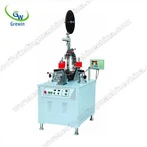
Automatic winding machine pay attention to the details in operation:

Automatic winding machine can effectively improve work efficiency! The improvement of the automatic processing capability of the winder is well known. Various sensors, high-precision transmission components, servo systems and other components have been continuously applied to the control of winding machines.
The control system of CNC winding machine is currently the most widely used field. It has the function of automatic wiring, which can be seen during the winding process of various coils. The system integrates functions commonly used in the winding process. The control circuit integrates the control and signal input of the equipment, and the application of the system can also be configured with random differential. The wire wheel is the mechanism that directly contacts the enameled wire in the winding machine structure. Different types of wires have different pulley structures. Our commonly used winding techniques include flat wire, single-strand round wire, multi-strand round wire and so on. Next, we will introduce the application of the conductor wheels of these three winding process configurations.
The groove shape of the flat steel wire wheel is mainly rectangular or rectangular, and the width and thickness of the guide wheel are larger than that of the conventional steel wire wheel. Since the winding cross-section of the flat wire in the winding process is mainly rectangular, the gap between the slots can be adjusted according to different wire diameters. When winding a single round wire, a V-shaped guide wheel is generally used, and the wire can be effectively guided into the V-shaped groove. The standard configuration of many automatic winding machines is usually V-shaped guide wheels. The winding of multi-strand round wire requires a strand of enameled wire, so its structure is special and requires a U-shaped guide wheel.
Different winders have different winding processes, and so do reels. Different types of steel wheels have certain differences in materials. Metal, nylon, copper and aluminum alloy materials are often used for winding reels, and some special winding reels are also special.