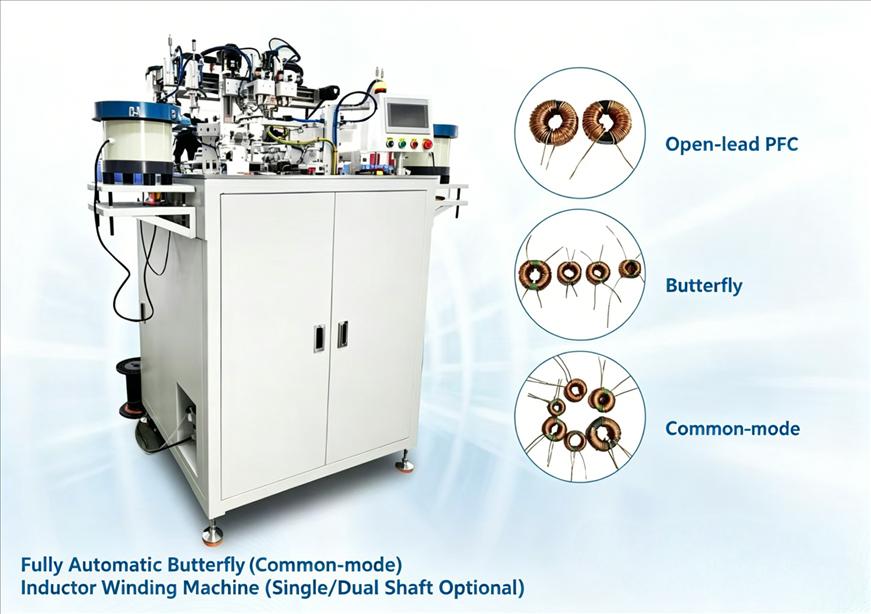
What Is Hook‑type Toroidal Winding & Its Production Advantages
Hook‑type toroidal winding is an automated toroidal coil manufacturing technology that uses a mechanical hook needle to pull enameled copper wire repeatedly through the inner hole of a toroidal magnetic core. It is mainly used for ring cores with tiny inner diameters where conventional shuttle‑type toroidal winding cannot pass. This process delivers stable winding quality, low scrap rate, and high throughput for mass‑producing common‑mode chokes, toroidal inductors and small toroidal transformers.
Hook‑type toroidal winding has grown extremely popular among power‑electronics manufacturers. Compared with shuttle‑style toroidal winding and manual winding, it solves long‑standing bottlenecks when winding small‑size magnetic components. Below, we break down its mechanism, strengths, use‑cases, and selection tips for hook‑type toroidal winding machine buyers.
What is the working principle behind hook‑type toroidal winding?
Hook‑type toroidal winding relies on a servo‑driven or pneumatic hook needle mechanism. The hook passes through the toroidal core's inner aperture, catches the magnet wire, and pulls the copper wire back through the core hole to finish one winding turn. The fixture rotates the toroidal core step‑by‑step, repeating the hook‑pull cycle until the preset turn count is achieved.
How does hook‑type winding differ from shuttle‑type toroidal winding?
A traditional shuttle‑type (magazine‑type) toroidal winding machine needs a wire‑storage shuttle to go through the core inner hole. If the core inner diameter is very small, the shuttle physically cannot enter. Hook‑type winding removes this restriction. Only the slim hook needle threads through the aperture, so it works for cores with compact inner dimensions that shuttle‑based equipment cannot handle.
What core types fit hook‑type toroidal winding processing?
Hook‑type winding supports most mainstream closed‑loop ring-shaped magnetic materials:
- Ferrite toroidal cores for common‑mode inductors
- Nanocrystalline/amorphous toroidal cores for EMI filters
- Iron‑powder sendust cores for power chokes
It is widely applied to produce toroidal chokes, differential‑mode inductors, and miniature toroidal transformers for power‑supply circuits.
|
No. |
Item category |
Value |
|
1 |
Equipment model: |
GWA-70HM |
|
2 |
Adapt to the magnetic ring (outer diameter): |
14mm-45mm |
|
3 |
Adapt to wire diameter: |
0.5mm-2.0mm |
|
4 |
Length of unilateral line: |
1200mm |
|
5 |
Winding speed: |
Depends on wire diameter and number of coils |
|
6 |
Application winding method: |
Conventional winding method / forward winding |
|
7 |
Power supply: |
220V/50Hz single-phase alternating current |
|
8 |
Air source: |
0.55Mpa-0.60Mpa |
|
9 |
Noise: |
60 decibels |
|
10 |
Equipment power: |
3KW |
|
11 |
Equipment power: |
0.55°/hour |
|
12 |
Operating ambient temperature: |
-5°C~40°C |
|
13 |
Relative humidity: |
(40~90)%RH |
|
14 |
Comprehensive pass rate: |
99.5% |
|
15 |
Machine weight: |
500KG |
What core production advantages does hook‑type toroidal winding bring?
For electronics factories making large batches of magnetic components, hook‑type toroidal winding delivers multiple practical production advantages that manual winding or shuttle‑type equipment cannot match.

1. Handles tiny inner‑diameter toroidal cores that other winding methods cannot process
The biggest merit of a hook‑type toroidal winding machine is its tolerance for small core inner apertures. Many common‑mode choke cores have narrow inner holes; shuttle‑type magazines cannot fit through. The slender hook needle can complete winding smoothly, expanding your available core‑model selection range for product R&D and mass‑production.
2. Higher consistency & lower defect rate for wound coils
Servo‑controlled automatic hook‑type equipment keeps stable wire tension during the full winding cycle. Enameled copper wire gets evenly arranged without overlapping or insulation scratching. Every finished toroidal inductor maintains uniform turn count and coil layout. Batch‑to‑batch electrical‑performance deviation is greatly reduced, cutting your post‑production testing rejection rate.
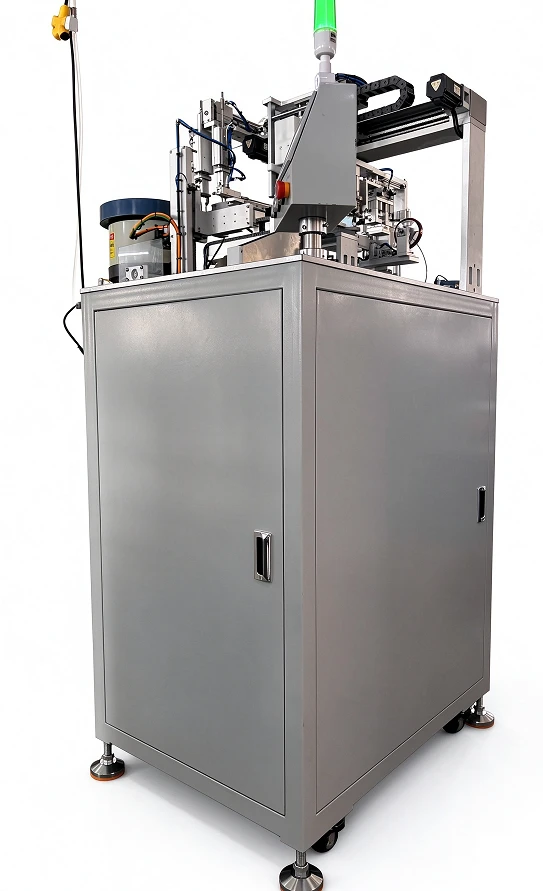
3. Greatly reduces labor input for toroidal coil mass‑production
Manual hook winding is slow and heavily depends on operator skill. A modern fully‑automatic hook‑type toroidal winding machine completes core feeding, wire feeding, hook winding, wire cutting, and finished‑part unloading automatically. One operator can supervise multiple machines simultaneously, which effectively eases skilled‑labor shortages and lowers per‑unit labor cost for your EMI filter component production line.
4. Flexible parameter adjustment for diversified product specifications
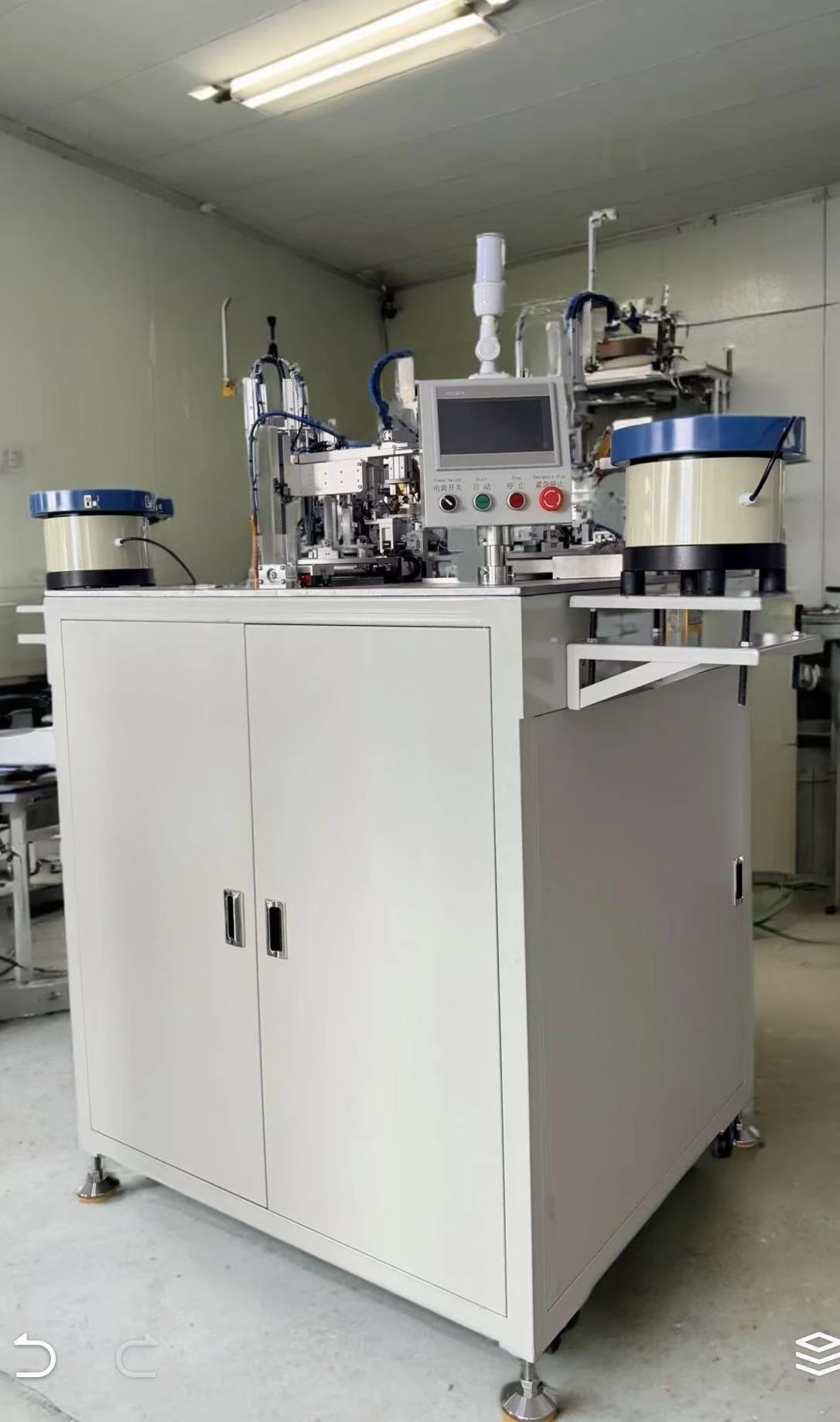
On PLC‑based hook‑type winding devices, operators set winding turns, hook travel stroke, wire tension, and rotating angle via a touch‑screen HMI. You can rapidly switch among different wire gauges and toroidal core sizes without heavy mechanical rework. This flexibility fits mixed‑model production for transformer and inductor manufacturers.
What are typical real‑world applications for hook‑type toroidal winding?
Hook‑type toroidal winding is concentrated in power‑electronics industries where compact toroidal magnetic components are required.
Which finished electronic components use hook‑type toroidal winding?
- Common‑mode chokes for switching power supplies, adapters, and new‑energy chargers
- Toroidal differential‑mode inductors for EMI‑filter modules
- Small‑size toroidal transformers for signal isolation
- Ring-shaped chokes for household appliances, industrial motor drives
Which industrial sectors heavily adopt hook‑type toroidal winding technology?
Manufacturers in consumer electronics, new‑energy power supply, industrial control, automotive electronics, and communications hardware rely on hook‑type toroidal winding to manufacture high‑reliability magnetic parts. As EMI‑suppression standards become stricter globally, demand for hook‑wound toroidal coils keeps rising year‑by‑year.
What limitations should you know about hook‑type toroidal winding?
Although hook‑type winding solves many manufacturing pain‑points, it is not universal for every toroidal‑core scenario.
When is hook‑type toroidal winding NOT your best option?
- For very thick copper wire combined with ultra‑large toroidal cores: A shuttle-type thick‑wire toroidal winding machine shows better efficiency.
- Extremely high‑turn‑count large-power toroidal transformers: Gear‑head or belt‑head toroidal winding solutions deliver higher output.
Tip: If you have mixed‑product orders including both small‑aperture common‑mode inductors and large-power toroidal transformers, evaluate a machine portfolio instead of relying only on hook‑type winding equipment.
How do I select a suitable hook‑type toroidal winding machine for my factory?
When sourcing automatic hook‑winding equipment, evaluate these key points:
1. Confirm core dimensions and wire‑diameter processing range
Check the machine's compatible toroidal‑core outer‑diameter / inner‑diameter window and supported enameled‑wire gauge, and match them with your main production BOM. At Grewin (https://www.coilwindingmachinechina.com/), our fully‑automatic hook‑type toroidal winding machine series covers mainstream sizes for common‑mode choke production.
2. Prefer servo‑driven hook mechanism over pure pneumatic solutions
Servo‑motor‑driven hook‑needle movement delivers smoother wire pulling and more stable tension control. This protects copper‑wire enamel insulation better and lowers scrap rate compared with simple pneumatic‑only hook structures.
3. Check automation grade and expandable post‑process connection
If you pursue high‑volume output, choose fully‑automatic models with auto‑feed and auto‑unload functions. Confirm whether you can link downstream stations such as testing, taping, or dispensing for your complete coil‑manufacturing workflow.
Frequently Asked Questions
Can hook‑type toroidal winding wind multi‑wire parallel coils?
Yes. Advanced hook‑type toroidal winding machines support multi‑wire parallel winding for certain wire‑diameter ranges, widely used for high‑current common‑mode inductor production. You need to verify multi‑wire parameters with equipment suppliers in advance.
Does hook‑wound toroidal coil have worse electrical performance than shuttle‑wound coils?
No. When winding quality is well‑controlled, hook‑wound toroidal chokes and inductors achieve equivalent electrical indexes, including inductance value, DCR, and EMI‑suppression effect. The coil performance mainly depends on core material, wire specification, and winding precision, not the hook‑winding process itself.
Where can I view real‑machine demos of hook‑type toroidal winding equipment?
Visit our official website: https://www.coilwindingmachinechina.com/. You can browse product specs, application cases, and working videos for our complete lineup of toroidal winding machines, including hook‑type, shuttle‑type, belt‑head, and gear‑head winding equipment. Feel free to contact us for datasheets, quotations, and factory‑visit arrangements.